What is Biophilic Art and How My Beautiful Wood Sculptures Bring Nature Home
What is Biophilic Art and Why It Matters in Modern Living
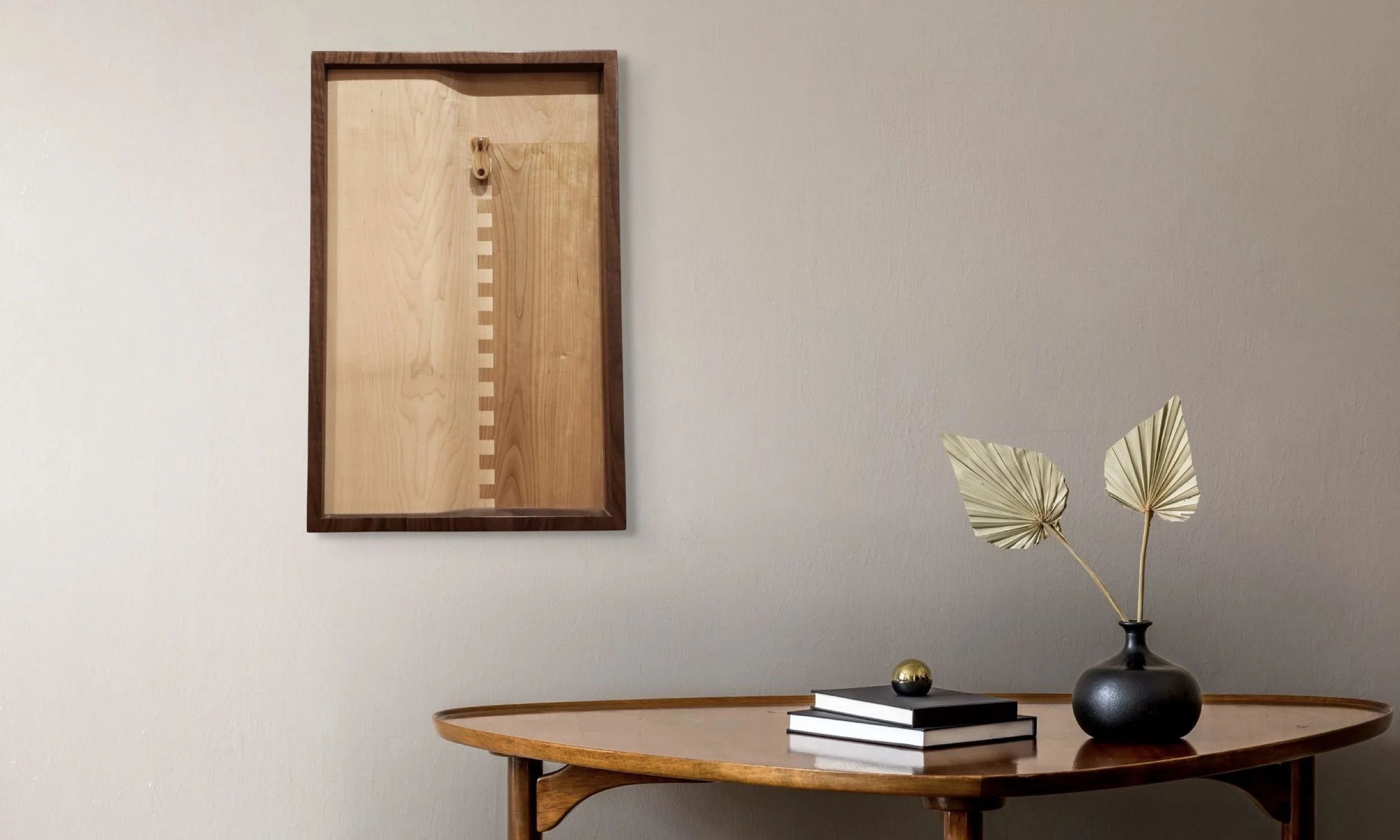
The term “biophilia” was popularized by biologist Edward O. Wilson in the 1980s. Biophilic art is art that helps people feel more connected to nature. It brings natural materials (like wood, stone, or plants), organic shapes (like waves or leaves), and soothing colors you’d find outdoors, inside.
The term “Forest Bathing” has been around for many years. Forest Bathing was developed in Japan in the 1980s, too. Many studies show that immersing yourself in nature has benefits for physical and mental health. These findings are supported by more than 1,000 studies. Benefits include lower stress levels, reduced blood pressure, and a boosted immune system.
Biophilic art gained popularity during the COVID-19 pandemic as people prioritized time spent at home. More people are seeing their homes as sanctuaries.
The goal of Biophilic art is to bring the calming, refreshing feeling of nature into the spaces where we live and work.
The Natural Allure of Wood: A Living Material for Biophilic Design
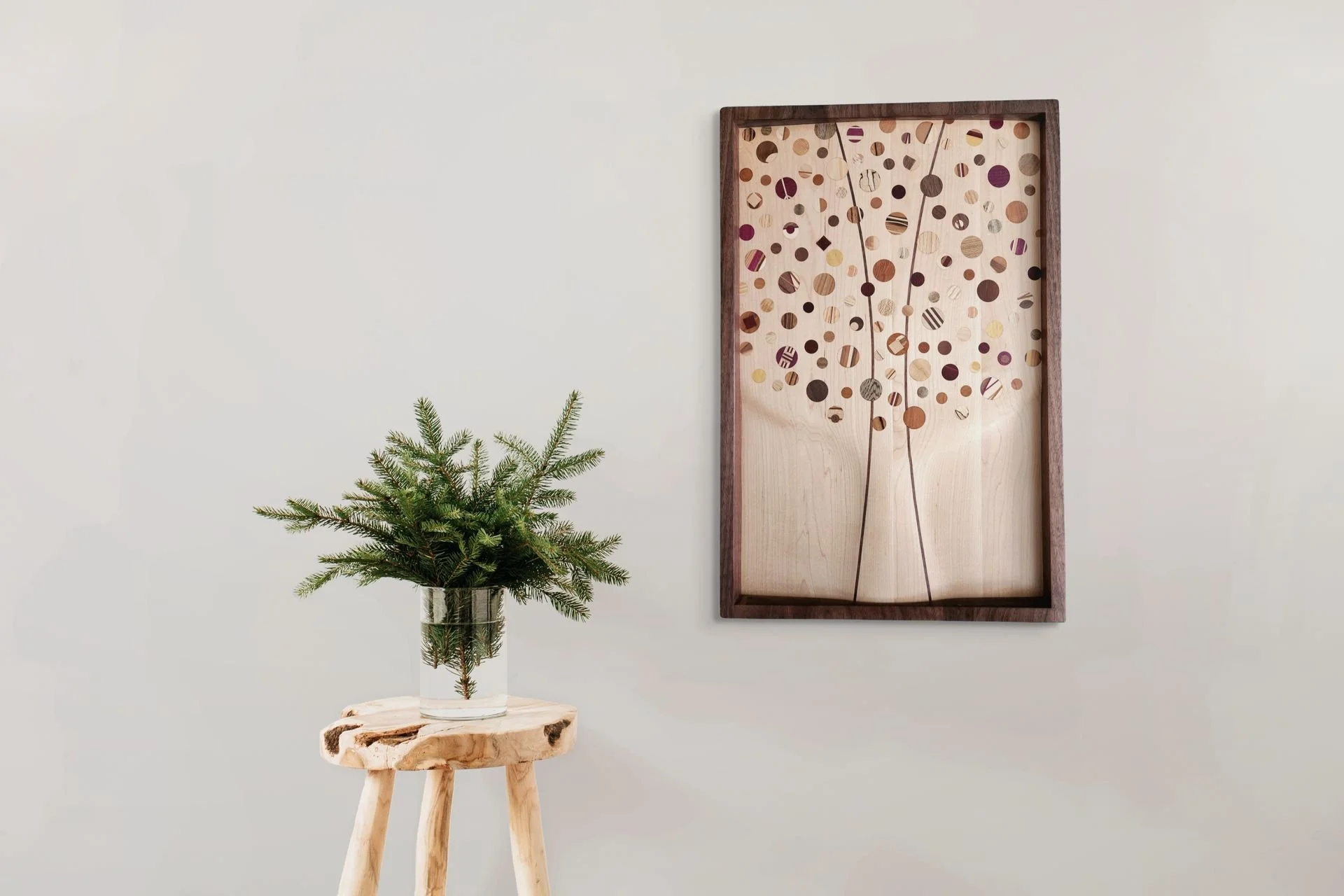
The intimate connection between humans and wood dates back to our earliest beginnings. Trees enabled us to build the most basic shelters, then houses, boats, furniture, and musical instruments.
It is no wonder that wood is a natural fit with the biophilic movement.
From Forest to Form: How I Create Biophilic Wood Sculptures
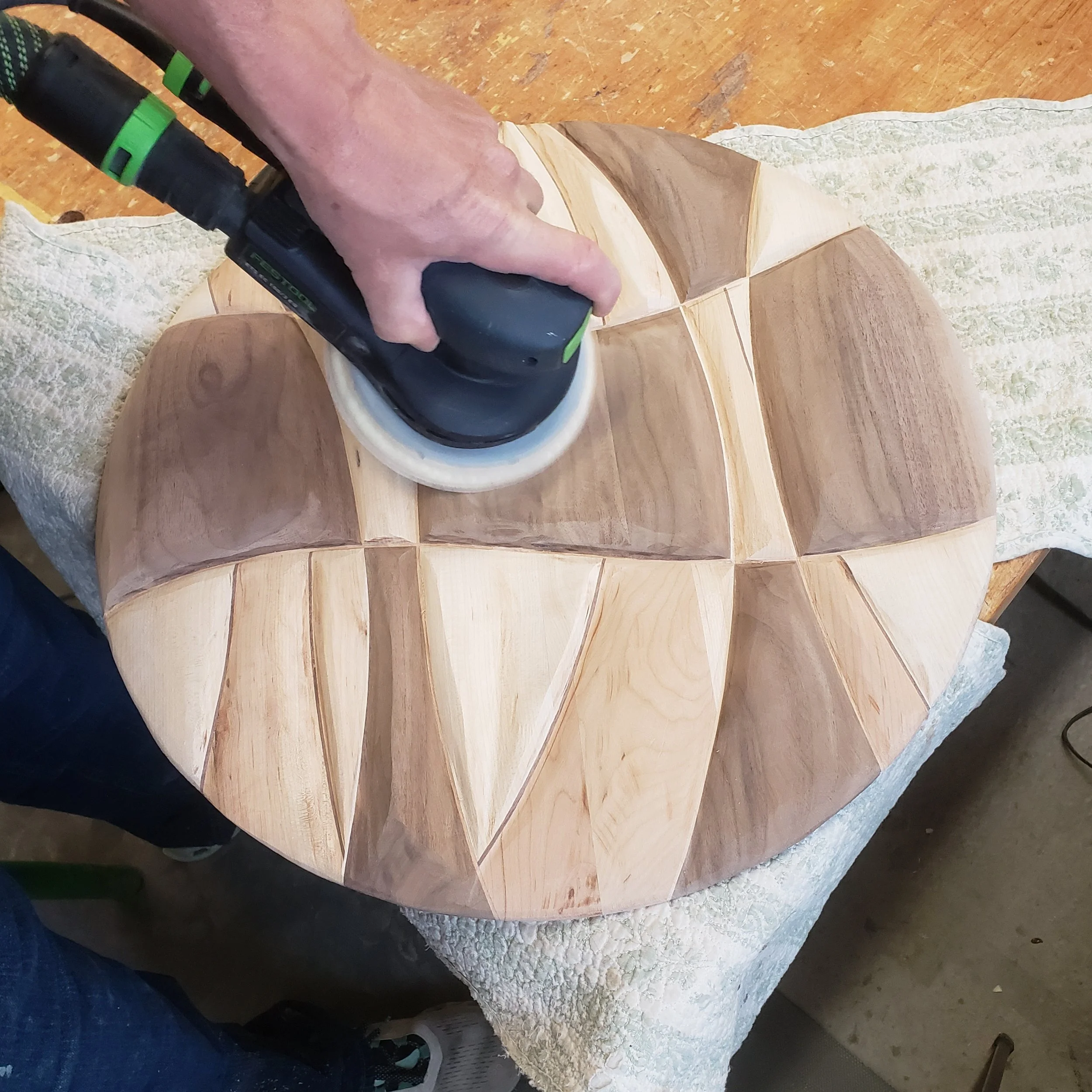
The wood I use to create my art is all responsibly sourced. Some of it comes from trees that fell in storms or reached the end of their natural life and had to be removed for safety. Most of the cherry, maple, walnut, and pine lumber I now use was harvested from our backyard. You can read about the harvest here.
When I have an idea for a sculpture, I look through my wood for the perfect natural grains, colors, patterns, and textures.
Bringing Nature Indoors: The Wellness Benefits of Biophilic Art
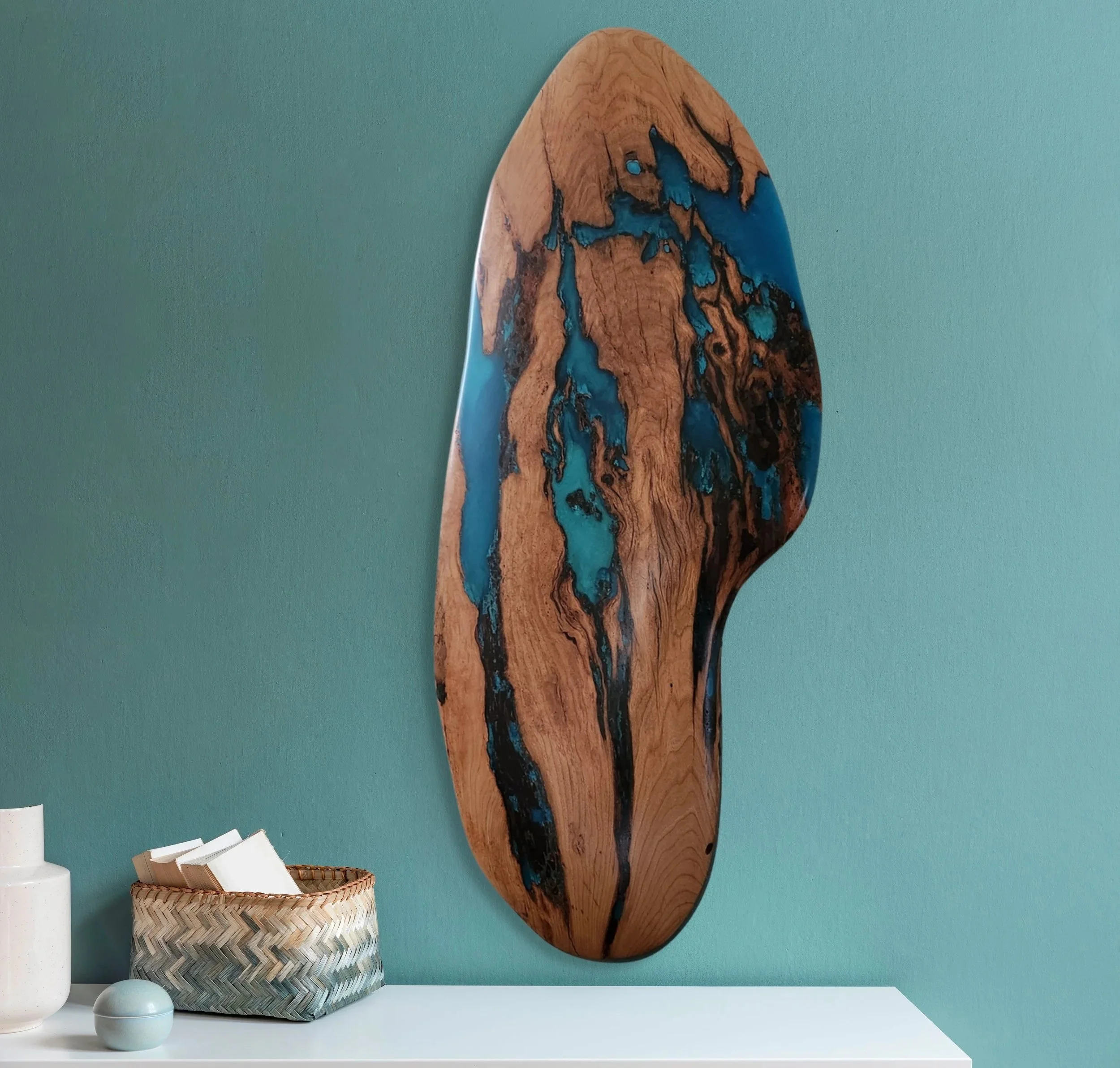
Wood art, with its organic warmth and beauty, offers a way to connect with nature while enhancing your home's ambiance. Here are some benefits of welcoming wood art into your living space.
Wood art engages the visual and tactile senses. It invites you to run your fingers along its smooth surface, pause, and admire its intricate details.
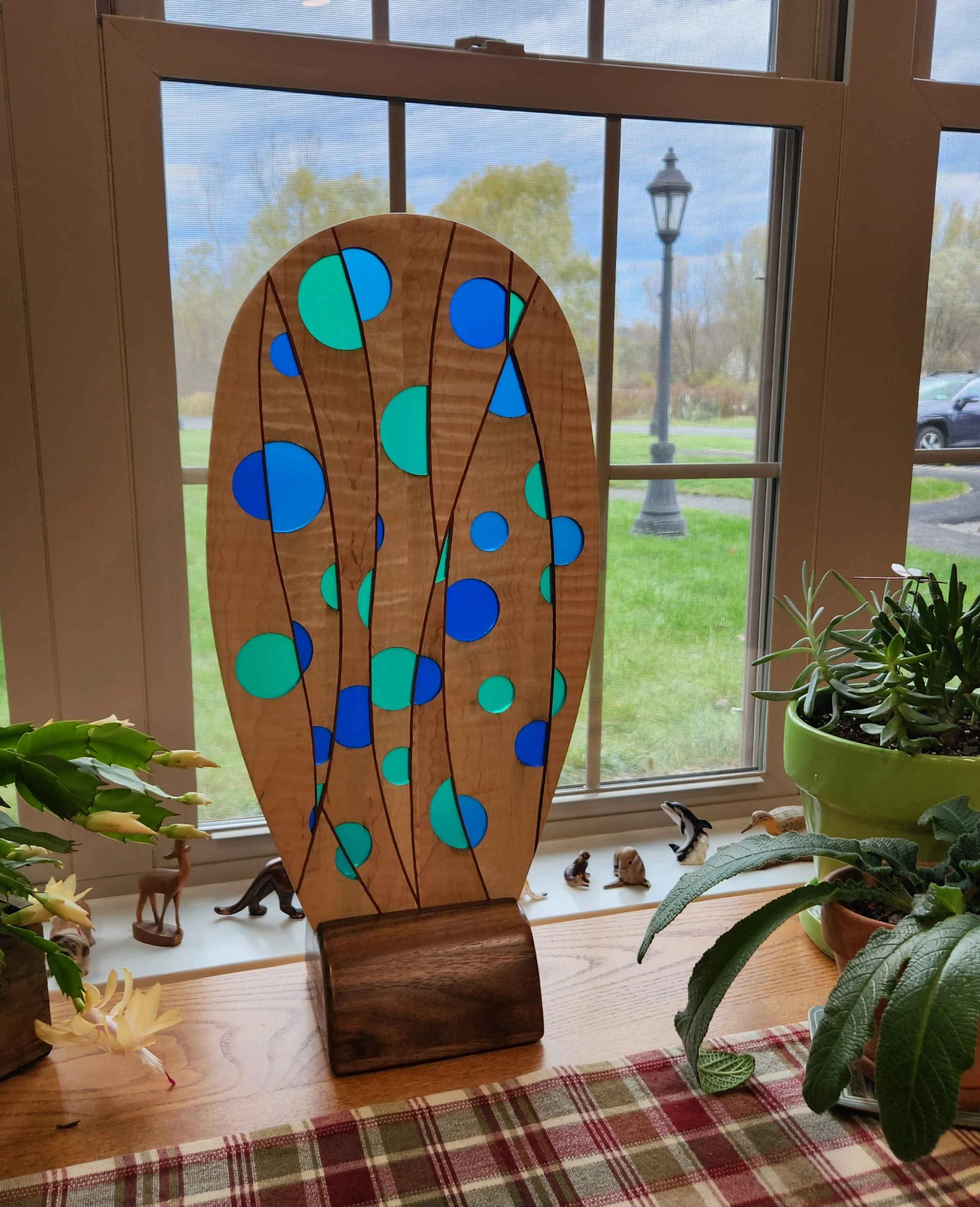
Wood art is a great conversation starter due to its uniqueness. My mother-in-law has this sculpture displayed in her livingroom. Her friends always approach it. They ask where she got it, how it was made, and who made it. Inevitably, they reach out and run their hands across its smooth surface on comment on the colors.
Decorating with Wood Sculptures: Tips for a Nature-Inspired Home
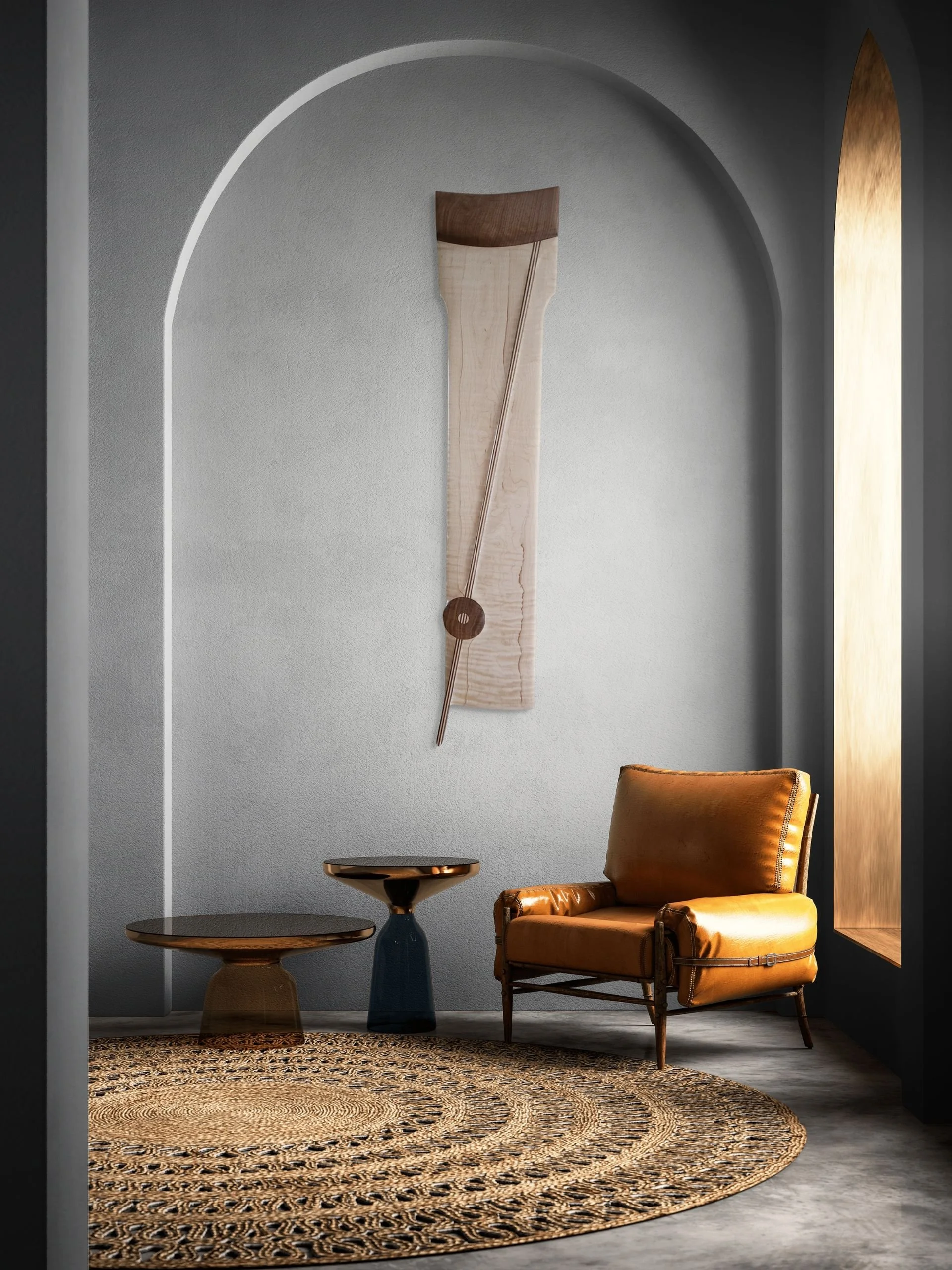
Wood sculptures make a good focal point, as seen in most of the photos above. You can make wood art the star of the show by placing it on an entry table. Wood art can be displayed in a niche or on a dedicated display shelf. We rotate the pieces on a handcrafted jelly cupboard in our entryway.
Use a sculpture to anchor a reading nook or meditation space. It adds calm presence and a sense of grounding.
Position sculptures near light sources — natural or accent lighting — to reveal the grain, texture, and sculptural shadows. A small spotlight or adjustable lamp can dramatically highlight wood contours.
Wood sculptures pair beautifully with other natural materials:
Stone or ceramic vessels
Plants or dried botanicals
Textured fabrics like linen or wool
This creates calm, grounded spaces that feel connected to nature.


Art with Purpose: Sustainability and Mindful Craftsmanship
By opting for wood art crafted from responsibly sourced materials, you're not just decorating your home—you're making an eco-conscious choice. Sustainable wood art helps preserve healthy forests for generations to come.
Beautiful art for life well lived,
Moe